
Donor Acquisition Starts Before the Click: Why Nonprofits Need CTV
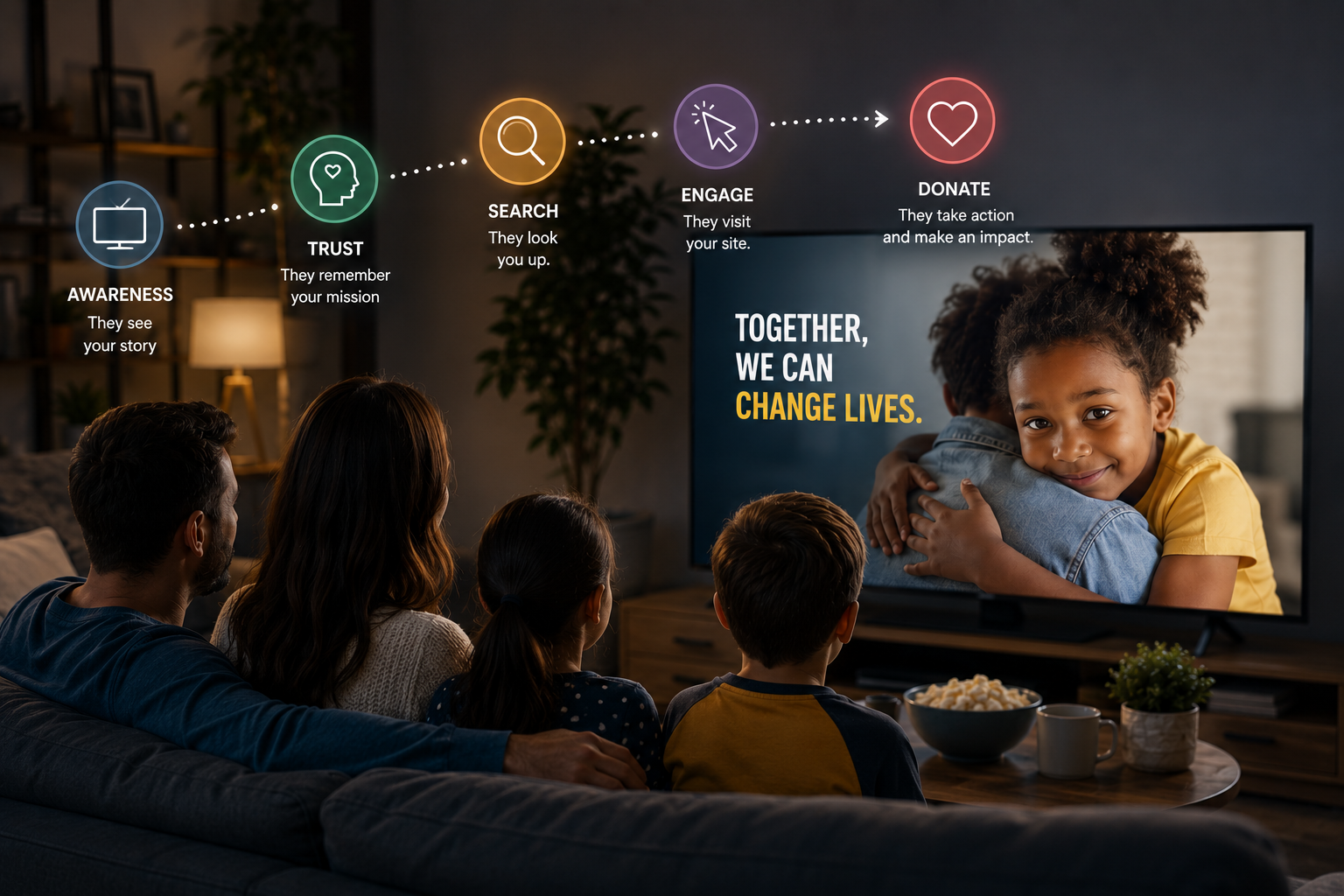
For years, nonprofit marketing has been pulled toward the bottom of the funnel.
Search ads. Social ads. Retargeting. Email. Donation pages. Conversion rates. Cost per acquisition. Last-click attribution.
All of those things matter. But they do not tell the full story of how someone becomes a donor.
A donor rarely wakes up, sees an organization for the first time, clicks an ad, and gives. More often, giving begins earlier. It starts with awareness. Then recognition. Then trust. Then relevance. Then action.
That is why donor acquisition starts before the click.
And it is why connected TV, or CTV, deserves a bigger role in nonprofit growth.
The donor journey does not begin on the donation page
The donation page is where the gift happens. It is not where the relationship begins.
Before someone gives, they usually need to understand who you are, what you do, why your work matters, and why they should trust you with their money. That is especially true in a crowded nonprofit market where donors are seeing more causes, more crises, more appeals, and more requests for support every day.
Nonprofits often measure the channels closest to the donation. Search gets credit because someone typed in the organization’s name. Email gets credit because someone clicked. Social gets credit because someone converted after seeing a post or ad.
But what created the intent before that action?
What made someone search for you in the first place?
What made your email feel familiar instead of random?
What made your donation ask feel credible instead of cold?
That is the role of upper-funnel media. And for nonprofits, few channels are better suited for that role than TV.
CTV brings nonprofit stories to the biggest screen in the home
CTV is television delivered through streaming platforms and internet-connected devices. It allows organizations to run video ads across streaming TV environments while using more modern targeting, reporting, and campaign controls than traditional television.
For nonprofits, this matters because mission-driven storytelling works best when people can feel it.
A :30 video can show the family helped by a housing organization. The patient supported by a health nonprofit. The student whose future changed because someone invested in them. The animal rescued. The community protected. The research funded. The life improved.
That emotional connection is difficult to create in a search ad. It is hard to build in a static display banner. It can be skipped quickly in a crowded social feed.
But on the TV screen, your story has room to breathe.
CTV gives nonprofits the ability to show up with the same kind of presence and credibility as major consumer brands, but with the targeting and flexibility needed for nonprofit budgets.
Streaming is where attention has moved
CTV is not a future trend. It is where TV viewing has already moved.
Streaming now represents a major share of total television viewing. Donors are not only watching traditional broadcast and cable. They are watching streaming apps, FAST channels, connected TV platforms, and on-demand content across the living room screen.
That shift matters for nonprofits because attention is one of the hardest things to earn. Email inboxes are crowded. Social feeds are fragmented. Search captures existing intent, but it does not always create new demand.
CTV gives nonprofits a way to reach people when they are in a high-attention environment, watching premium video content, often with sound on, on the largest screen in the home.
That does not mean CTV replaces search, social, email, direct mail, or events. It means CTV can make those channels work harder.
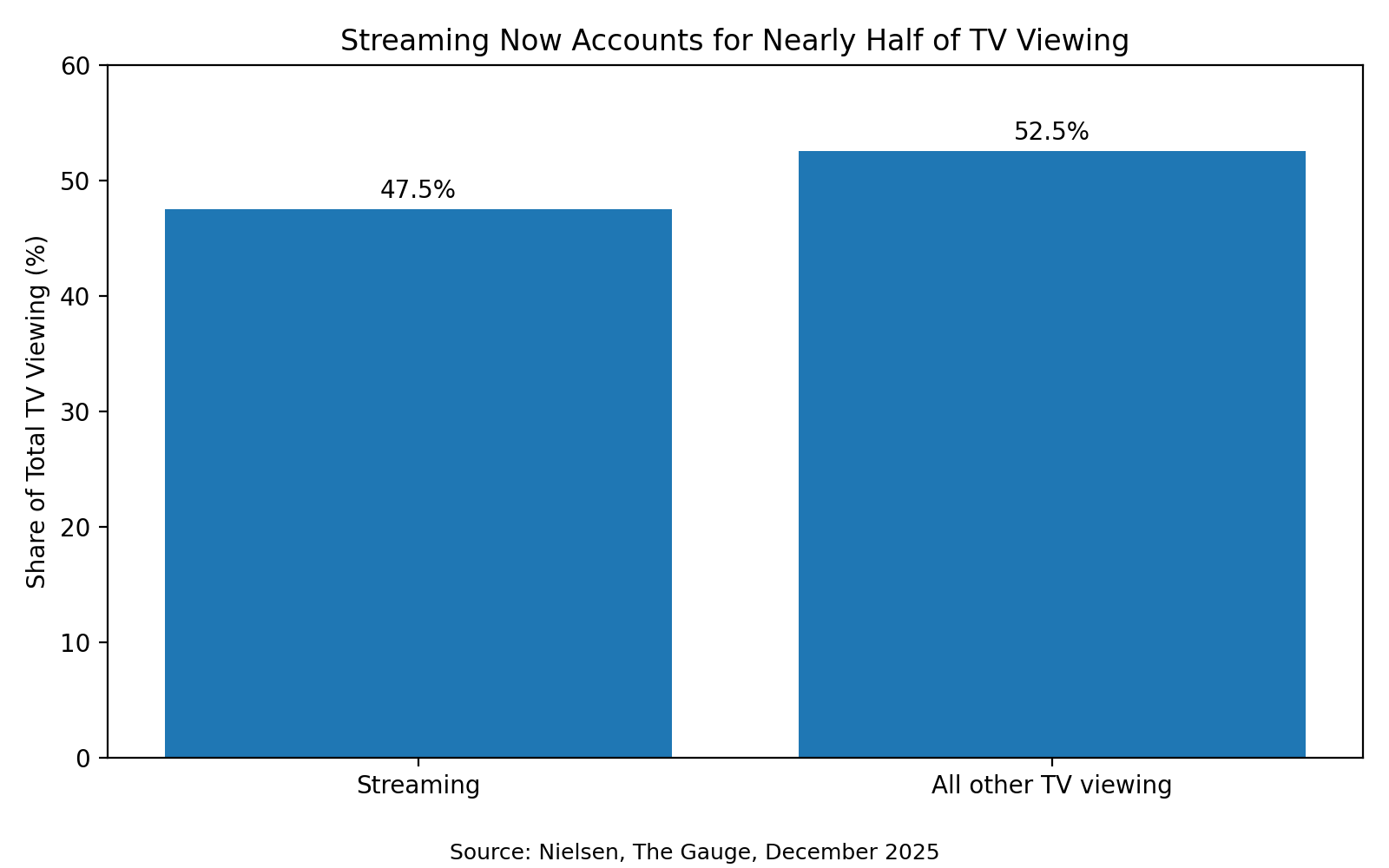
Nielsen reported that streaming captured 47.5% of total TV viewing in December 2025, with broadcast at 21.4% and cable at 20.2%.
TV creates demand that other channels capture
One of the biggest mistakes in nonprofit marketing is assuming the last click created the donor.
In reality, the last click often captures demand that another channel helped create.
A person may see a nonprofit’s CTV ad at night, remember the mission, search the organization the next morning, visit the website later in the week, receive an email after signing up, and donate after a direct appeal.
If the organization only looks at last-click attribution, search or email may get the credit. But the story started earlier.
CTV can create the familiarity that makes a donor more likely to engage with the next touchpoint. It can increase branded search. It can drive website visits. It can improve recall. It can make direct response channels feel less like a cold ask and more like a continuation of a story the donor already understands.
This is why nonprofits should not think of CTV as “just awareness.”
CTV is donor acquisition infrastructure.
It helps build the mental availability and trust that future fundraising depends on.
Nonprofits are already investing more in digital advertising
The nonprofit sector is becoming more sophisticated about paid media. Digital advertising is no longer optional for organizations that need to grow awareness, acquire donors, recruit volunteers, drive event participation, or move people to action.
But many nonprofits are still over-invested in the channels closest to conversion and under-invested in the channels that create demand.
That creates a long-term risk.
When nonprofits only chase people who are already searching, already clicking, or already on their list, they eventually run into a ceiling. The same audiences get saturated. Acquisition costs rise. Email lists fatigue. Social performance becomes less predictable. Retargeting pools stay too small.
CTV helps expand the pool.
It allows nonprofits to reach new people before they are actively searching, before they are on the email list, and before they have made a decision about where to give.
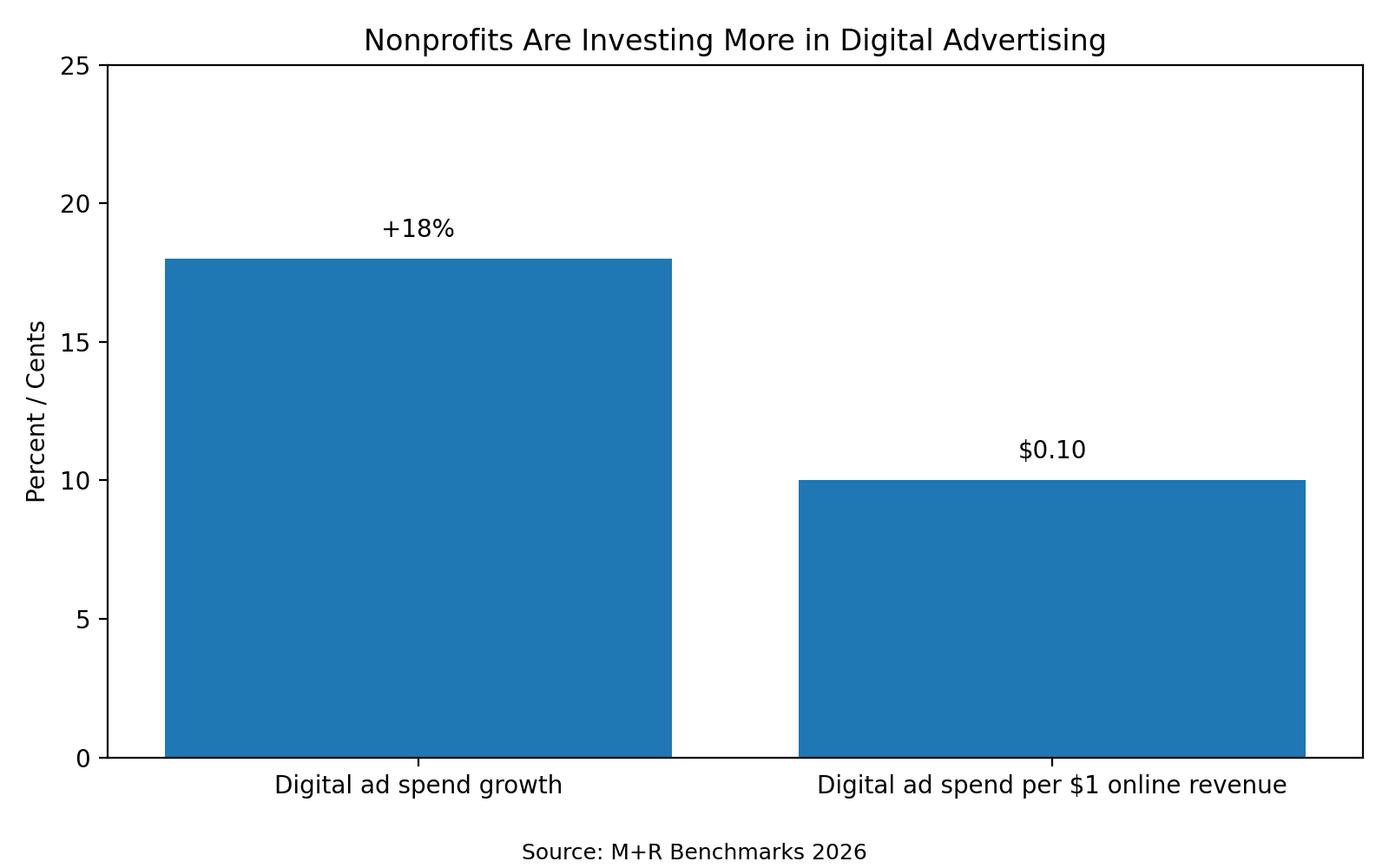
M+R Benchmarks 2026 found that nonprofit digital ad spend increased 18% in 2025, and nonprofits reinvested $0.10 in digital ads for every dollar of online revenue.
Donor acquisition is getting harder
The need for better acquisition strategies is urgent.
Across the sector, many organizations are facing pressure on donor counts, retention, and grassroots giving. Even when total dollars rise, growth can be concentrated among larger gifts, while smaller-dollar donor bases become harder to maintain.
That matters because a healthy donor file depends on new people entering the pipeline.
Nonprofits need ways to introduce their mission to new audiences, build trust earlier, and create a stronger path from awareness to action. CTV can help do that by putting nonprofit stories in front of people in a format that feels credible, emotional, and memorable.
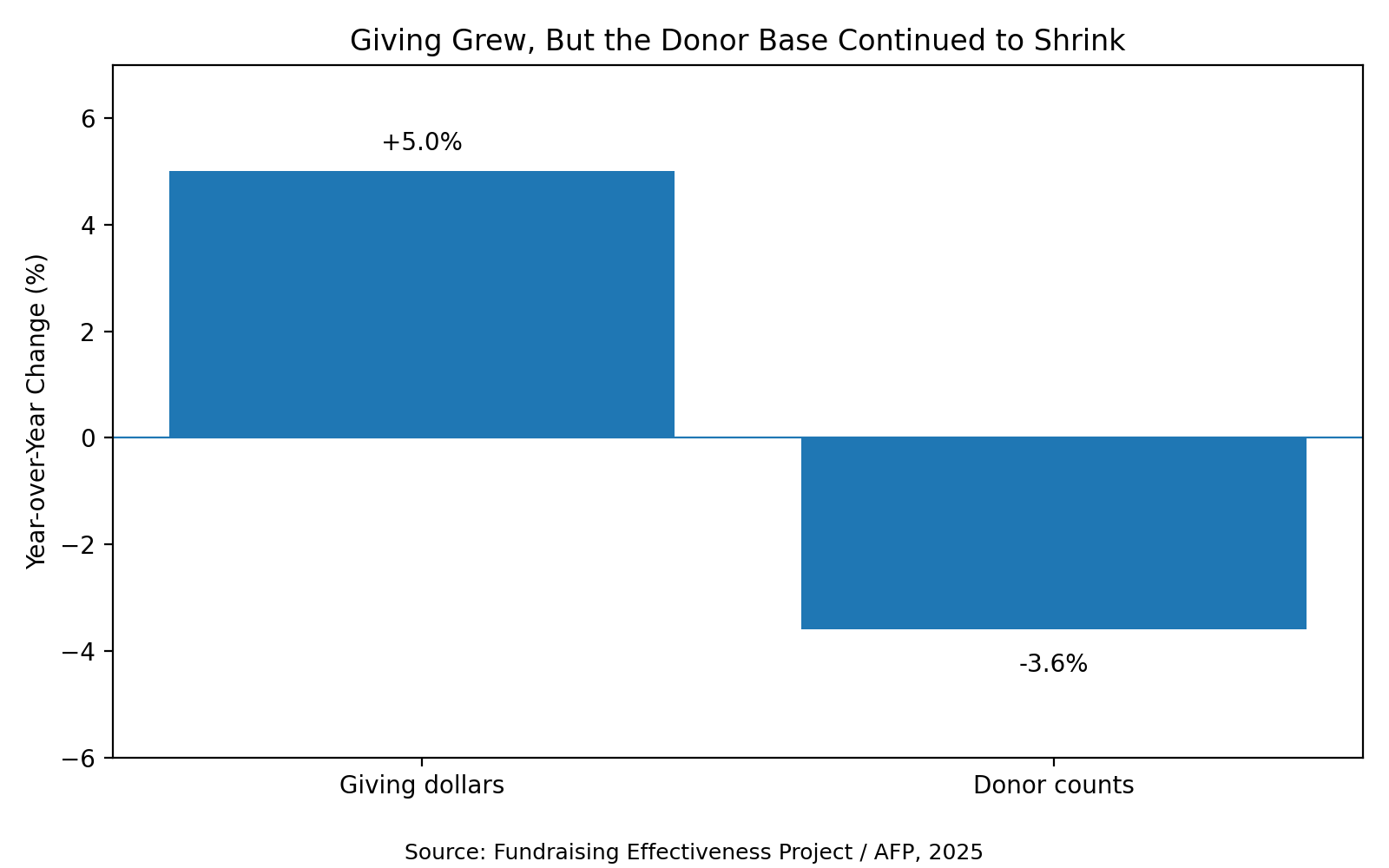
The Fundraising Effectiveness Project reported that total charitable dollars grew 5.0% in 2025, while donor counts declined 3.6%, continuing a donor decline trend that began in 2021.
What nonprofits should measure from CTV
CTV should not be judged only by immediate donations. That would be like judging a first conversation by whether someone proposed marriage.
Instead, nonprofits should measure CTV based on the role it plays in the journey.
That can include:
Reach: How many people or households were exposed to the message?
Frequency: How often did the target audience see the campaign?
Video completion rate: Did people watch the message through?
Website lift: Did site traffic increase during or after the campaign?
Search behavior: Did more people search for the organization or campaign?
QR scans or vanity URL visits: Did viewers take direct action from the TV screen?
Donation activity: Did conversions increase during the campaign window?
Retargeting growth: Did the campaign create a larger pool of engaged prospects?
Brand lift: Did awareness, recall, favorability, or intent improve?
The right measurement depends on the campaign goal. A donor acquisition campaign should be measured differently than an event promotion campaign, a volunteer recruitment campaign, or a public awareness campaign.
But the larger point is this: CTV can be measured. It can be tested. It can be optimized. And it can be connected to downstream action.
A smart first CTV campaign does not need to be complicated
Nonprofits do not need to start with a massive national campaign.
A smart first campaign can be focused.
Choose one audience. Pick one geography. Tell one clear story. Give people one action to take. Run long enough to build frequency. Then measure what happened.
For example, a nonprofit could run a campaign in its strongest donor market before a major fundraising push. A hospital foundation could build awareness for a service line or giving campaign. An education nonprofit could reach parents in a specific region. An animal welfare organization could promote adoption, monthly giving, or emergency response support. A health nonprofit could build trust before a year-end appeal.
The best first CTV test is not about doing everything. It is about learning what happens when your mission shows up on the biggest screen in the home.
Why AdGood exists
Historically, TV has been difficult for nonprofits to access.
It has often been too expensive, too complex, too hard to measure, or built for large commercial advertisers with large media teams. Many nonprofits know their stories belong on TV, but they have not had a practical way to get there.
AdGood was created to change that.
As a nonprofit built for nonprofits, AdGood helps mission-driven organizations access streaming TV inventory at rates designed for the sector. We aggregate premium CTV inventory, manage campaign execution, support reporting and attribution, and make the buying process easier for organizations that do not have large media teams.
The goal is simple: help nonprofits use the power of TV to grow.
Not just to look bigger.
To be better known. Better trusted. Better remembered. And better positioned to acquire the donors, volunteers, supporters, and advocates they need to advance their missions.
The future of nonprofit growth will not be last-click only
Nonprofits cannot build durable donor growth by only investing at the very bottom of the funnel.
The organizations that grow will be the ones that understand the full journey. They will invest in trust before the ask. Story before conversion. Reach before retargeting. Memory before the click.
CTV belongs in that strategy.
Because donor acquisition does not start when someone lands on your donation page.
It starts when someone first understands why your work matters.
And for nonprofits, there are few better places to tell that story than on the biggest screen in the home.
