
Limited budgets stretch further when nonprofits strengthen the message, not just the media buy

Nonprofits do not usually have the option to outspend the problem. They have to out-communicate it.
That is what makes limited budgets so unforgiving. When dollars are tight, the instinct is often to focus on the media buy: lower CPMs, broader reach, more placements, more efficiency. But the stronger lever is often the message itself. If the creative is clearer, more credible, more memorable, and more emotionally precise, each impression has a better chance of doing real work. And that is what stretching a budget actually means.
This matters because nonprofits are already spending more on advertising. Whole Whale’s 2024 Nonprofit Advertising Benchmark Study, based on Form 990 data from more than 7,000 U.S. nonprofits, found that total ad spending rose 12%, with average ad spend per organization increasing from about $26,000 to $29,000. The issue is not whether nonprofits are putting money into media. The issue is whether that spend is being turned into stronger attention, better understanding, and more action.
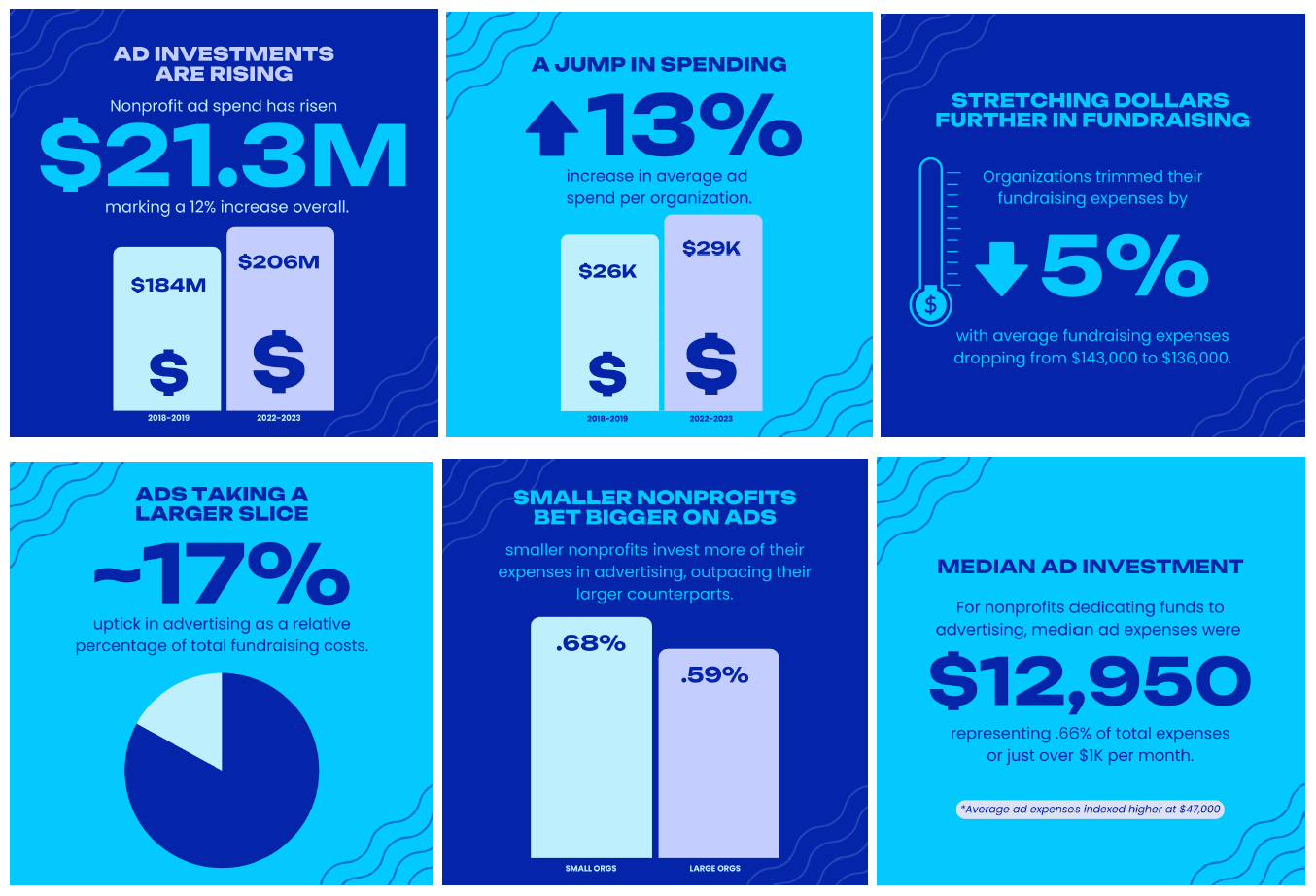
Chart and Data source: Whole Whale
That is where creative becomes a force multiplier. Kantar argues that creative quality is one of the most important controllable drivers of campaign profitability, especially when budgets are under pressure. In its research with WARC, Kantar found that the most creative and effective ads generated more than four times as much profit, and in a separate Kantar write-up, ads validated as both creative and effective were four times more likely to lift sales, volume, and return on marketing investment profit. The lesson is simple: when you cannot buy infinitely more media, you need each ad to carry more weight.
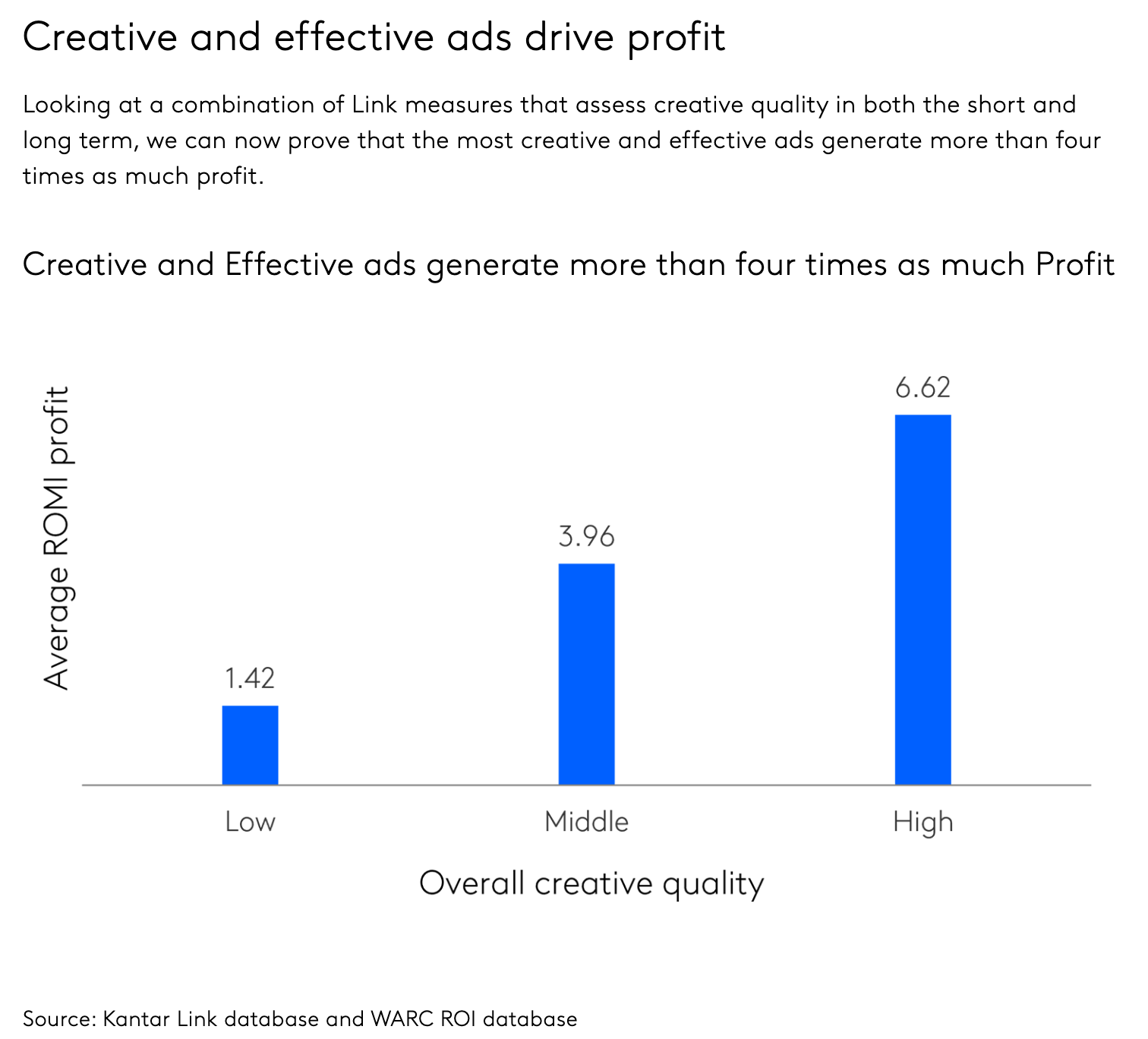
Chart and Data source: Kantar
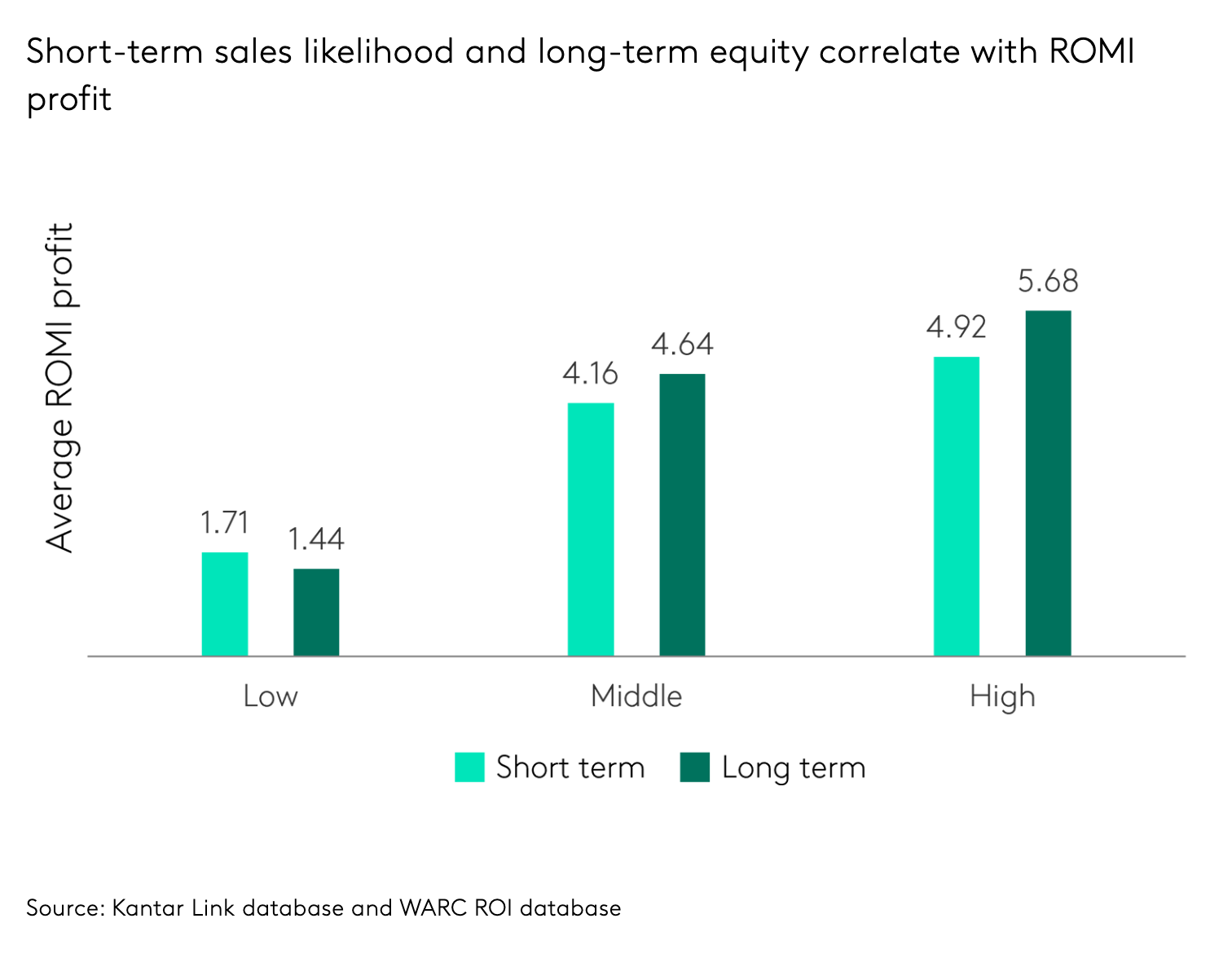
Chart and Data source: Kantar
For nonprofits, that means the cheapest media is not always the most efficient media.
Low-cost placements can look good in a spreadsheet. They can deliver volume. They can create the appearance of efficiency. But if the message is weak, the brand is unclear, or the environment is low-attention and forgettable, the organization may end up paying less per impression while getting less value from every impression. A stretched budget is not just a lower-cost budget. It is a budget that creates more recognition, more trust, and more response from the same dollars.
So what makes a nonprofit message work harder?
First, it has to make the mission feel tangible. Yale School of Management research on donor behavior found that donation intent increased when organizations framed themselves as sources of solutions, made impact feel concrete, and showed how many small contributions can add up to meaningful collective change. The same research also found that donor conversion improved when calls to action better matched donor motivation, including cases where more specific language outperformed a generic “Give Now.”
Second, the message has to build trust, not just urgency. Storyraise’s 2024 benchmark report found that more than 70% of respondents said they were more likely to donate to a nonprofit that effectively used storytelling to communicate mission and impact. More than 80% said they were likely to continue supporting a nonprofit if they received regular updates with stories about the people or causes served, and nearly 60% said effective storytelling made nonprofits feel more transparent. That is a useful reminder that the best creative is not just persuasive. It is clarifying. It helps people understand what the organization actually does and why it deserves belief over time.
Third, the message has to be simple enough to survive limited exposure. Nonprofits often try to say too much at once: the scale of the problem, the full mission, the program detail, the urgency, the fundraising ask, the volunteer ask, and the brand promise. On a limited budget, that usually backfires. Strong creative does not try to explain everything. It lands one clear idea, ties it tightly to the organization, and gives the audience a reason to care. Kantar’s findings point in the same direction: great ads are not just noticed; they keep the brand at the heart of the story and create memories that stick.
This is also why creative and media should not be separated too neatly. The message and the environment shape each other. A good ad placed in the wrong setting can lose power. A strong environment can help a message land with more seriousness and attention. That is especially relevant now because streaming has become such a dominant viewing environment. Nielsen reported that streaming represented 47.5% of all TV viewing in December 2025, the largest share Nielsen had ever recorded. That means premium streaming is no longer a side channel. It is where a huge amount of audience attention already lives.
For nonprofits, that creates an important opportunity. If the creative is strong, connected TV can help that message travel in a premium, full-screen environment where story and emotional clarity have room to work. That matters because nonprofit advertising is often trying to do more than drive a click. It is trying to build trust, seriousness, and memory. In that sense, the right media buy is not just about reach. It is about giving the message a setting where it can actually perform.
This is where budget efficiency becomes more strategic than tactical. Stretching a budget further does not simply mean finding cheaper inventory. It means putting dollars behind creative that is clear enough to convert interest into belief and placing that creative in environments where people are more likely to absorb it. A nonprofit can waste a small budget very quickly by distributing mediocre messaging across too many cheap placements. It can often do better by tightening the message, focusing the audience, and using fewer but better environments. That is not less disciplined media planning. It is better disciplined media planning.
For AdGood, this is a core part of the mission. Nonprofits should not be forced to choose between affordability and quality. They should be able to access strong streaming environments without being priced into weak media decisions. But access alone is not enough. The message has to earn the placement. The organizations that stretch limited budgets furthest are usually not the ones chasing the most media. They are the ones making each impression more purposeful: clearer message, stronger story, better context, more trust. That is how limited spend starts to act bigger than it is.
So if a nonprofit wants to make a limited media budget go further, the first question should not be, “Where can we buy cheaper impressions?”
It should be, “Is our message strong enough to deserve more impressions?”
Because when the creative gets sharper, the media buy gets smarter. And when both work together, even a limited budget can go a lot further.
If your nonprofit wants to explore how stronger creative and premium CTV can work together to make a limited media budget go further, reach out to AdGood to get started. Contact Us
