
Why Monthly Giving Starts Before the Donation Page

Monthly giving is often treated like a donation-page problem.
Should the recurring box be checked by default?
Should the suggested amounts be lower?
Should the copy make the monthly option more visible?
Those questions matter. But they come late.
By the time someone reaches a donation page, most of the real work has already happened. Or it has not. Monthly giving does not begin with a form field. It begins earlier, when a nonprofit becomes known, remembered, trusted, and emotionally credible enough for someone to imagine an ongoing relationship, not just a one-time gift. That distinction matters even more now because fundraising is becoming more concentrated. The Fundraising Effectiveness Project’s Q1 2025 data showed that dollars raised rose 3.6% year over year, while donor counts fell 1.3%. The smallest donor segment, people giving $1 to $100, fell 11.1%, and retention slipped from 18.3% to 18.1%. More money is still flowing into the sector, but from a narrower base, and broad-based donor loyalty remains under pressure.
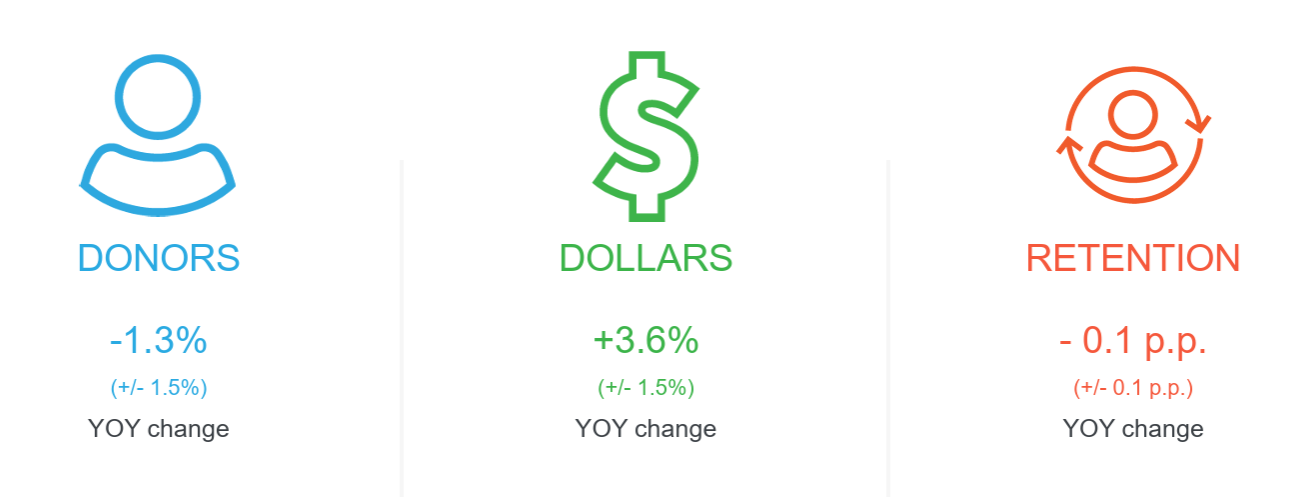
Chart and data source: The Fundraising Effectiveness Project
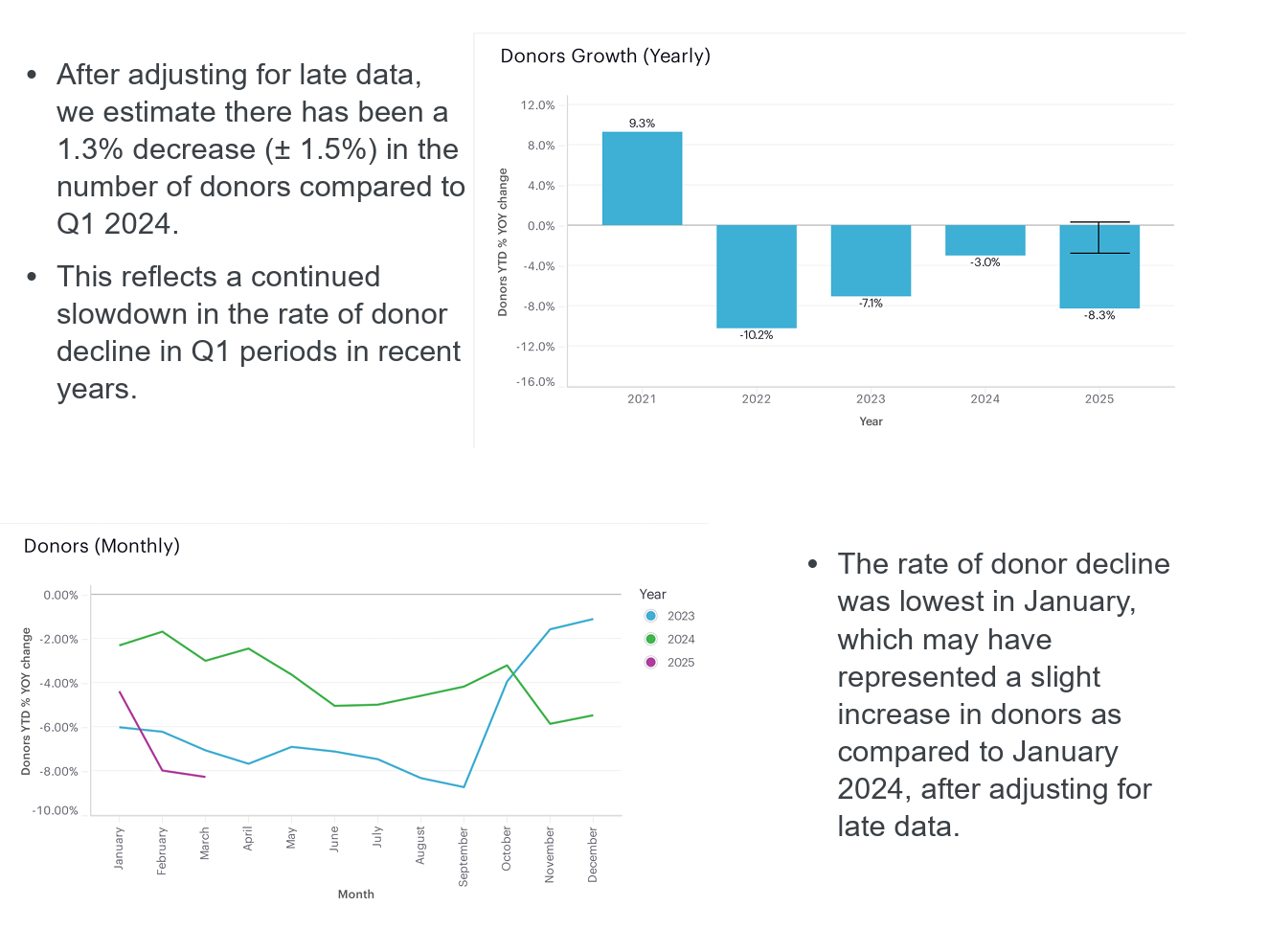
Chart and data source: The Fundraising Effectiveness Project
That is exactly why monthly giving matters. A recurring donor is not simply another conversion. It is a stronger relationship. It is a donor saying: I trust this organization enough to stay with it. In a market where donor counts are softening and small-dollar participation is getting harder to maintain, relationship depth becomes more valuable, not less. What nonprofits need now is not just more asks. They need more durable trust.
And that is where many organizations still make the same strategic mistake. They build the monthly giving offer at the bottom of the funnel without investing enough at the top and middle. They focus on the donation page, the email subject line, the landing page copy, the urgency of the campaign. But people rarely become recurring donors because a form was optimized well. They become recurring donors because they believe the organization will matter next month, and the month after that, and the month after that. Recurring support is not just a response to urgency. It is a response to belief.
That belief usually comes from a sequence, not a moment.
First comes awareness. A person has to know your organization exists.
Then comes recognition. They see you again and remember who you are.
Then comes trust. They start to believe your work is real, effective, and worthy of support.
Only then does monthly giving begin to make emotional sense.
That sequence matters because trust is still one of the nonprofit sector’s greatest advantages. Independent Sector’s 2025 research found that 57% of Americans report high trust in nonprofit organizations, more than any other sector measured. That is a remarkable asset. But sector-level trust is only the starting point. Donors do not give every month to “the nonprofit sector.” They give every month to specific organizations they recognize, believe in, and feel confident will use their support well.
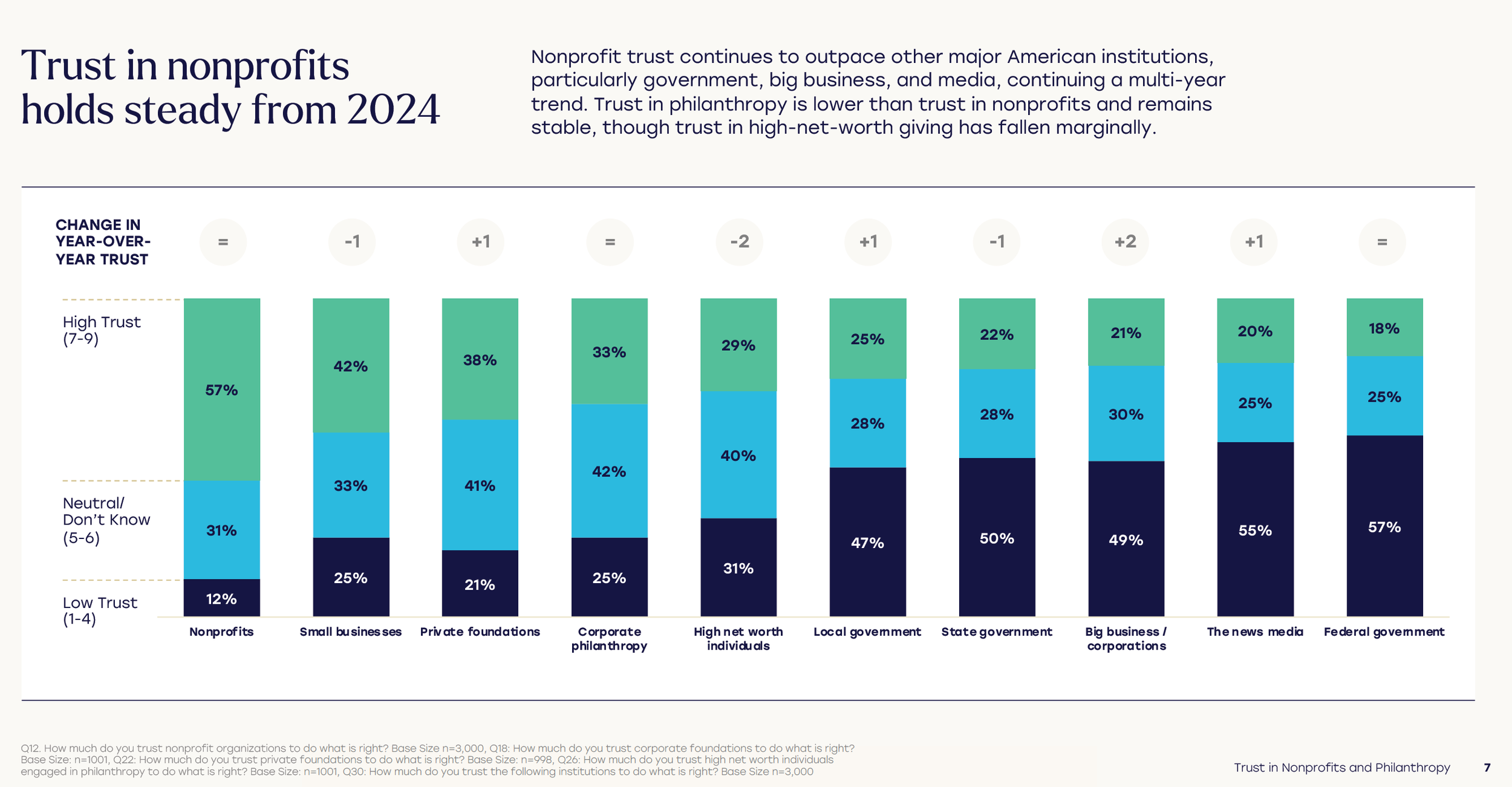
Chart and data source: Independent Sector
This is the core idea that too many fundraising conversations miss: monthly giving starts before the donation page because trust starts before the donation page.
It starts when people see you more than once.
It starts when your mission is easy to understand.
It starts when your organization shows up with consistency.
It starts when people can connect your name with real impact.
It starts when support feels less like a one-time reaction and more like a relationship they want to continue.
That is why monthly giving should not be understood only as a fundraising program. It is better understood as a trust program.
The strongest recurring-giving programs usually share a few things in common. They are easy to understand. They make the mission feel active and ongoing. They communicate impact clearly. They help the donor feel included, not only solicited. And they build enough visibility before the ask that recurring support feels natural instead of premature.
This is also where media strategy becomes much more important than many nonprofits assume.
Too often, monthly giving gets credited to the channels that capture the conversion: email, direct mail, paid search, SMS, a campaign landing page. Those channels absolutely matter. But capture is not the same as creation. In many cases, the donation page gets credit for a relationship that was built somewhere else. The conversion is recorded at the bottom of the funnel, but the trust was built higher up.
That is where brand-building channels matter. They create the conditions that make recurring giving possible by helping a nonprofit become familiar before it becomes urgent. A person who has seen and remembered an organization over time is far more prepared to commit to sustained support than someone encountering it for the first time in the middle of a campaign.
This is one of the reasons CTV matters so much right now.
Connected TV gives nonprofits something increasingly rare in modern media: the ability to show up in a premium, full-screen, high-attention environment where story, emotion, and credibility can actually do their job. Nielsen reported that streaming accounted for 44.8% of all TV viewing in May 2025, surpassing the combined share of broadcast and cable for the first time. By December 2025, streaming reached 47.5% of total TV viewing, the largest share Nielsen had recorded. This is not an emerging side channel anymore. It is a dominant viewing environment.
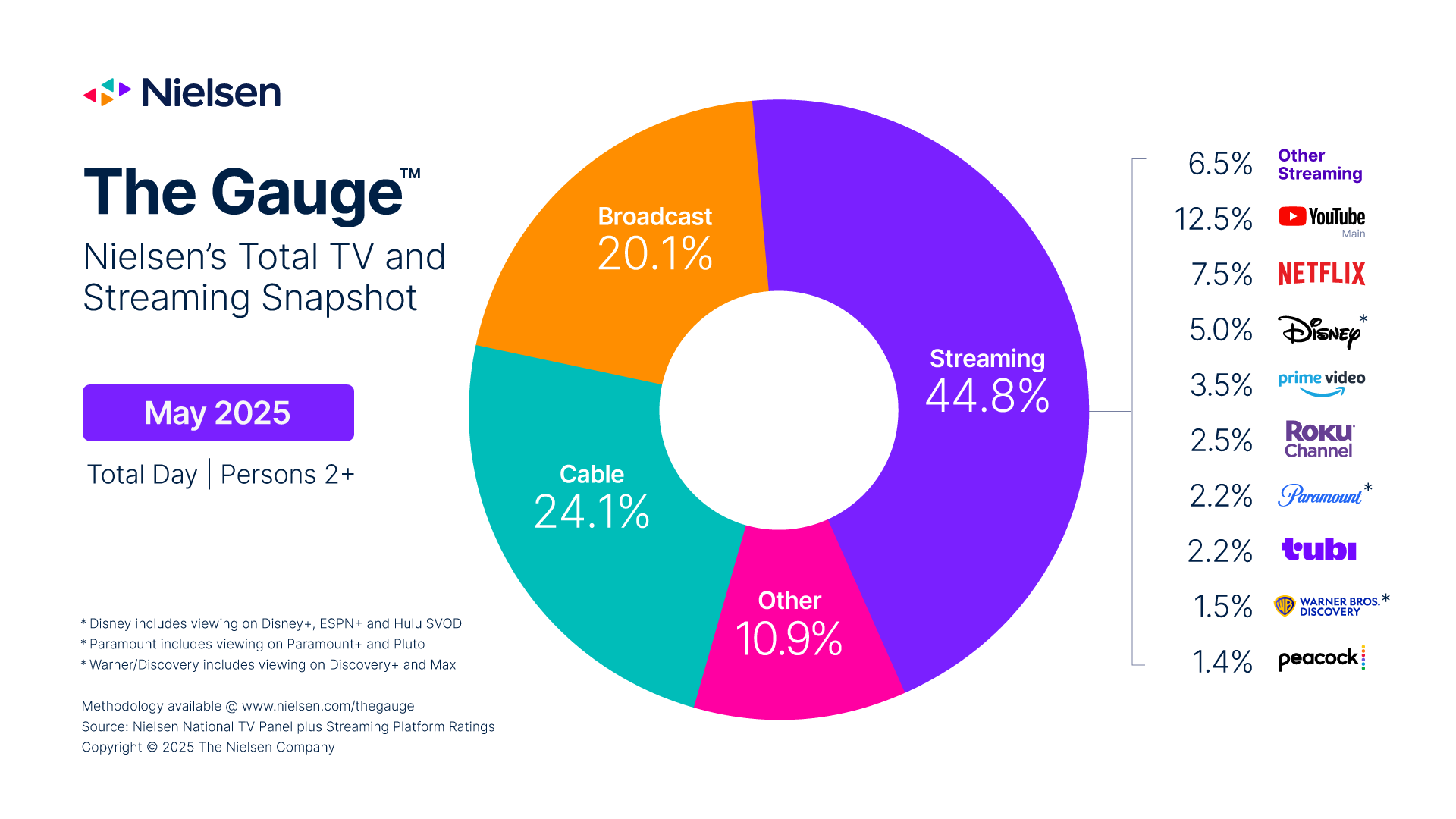
Chart and Data source: Nielsen
For nonprofits, that matters because monthly giving is not won only through efficiency at the moment of conversion. It is won through familiarity, emotional resonance, and repeated exposure in environments that feel credible. CTV helps organizations do that. It lets a nonprofit show up with the quality, presence, and seriousness that trust requires. It gives a cause room to be understood. It gives a donor a reason to remember.
And for many nonprofits, that kind of visibility has historically felt out of reach.
That is exactly why AdGood exists.
AdGood was built on a simple belief: nonprofits should not be shut out of premium streaming TV because the commercial media market was not built for their budgets or their mission. Nonprofits deserve access to quality inventory, strong pricing, and media environments that help them build real trust, not just chase clicks. The goal is not to make nonprofits act like big consumer brands. The goal is to give mission-driven organizations access to the same kind of premium storytelling environments that help brands become known and trusted in the first place.
That matters because budget efficiency is not just about spending less. It is about making every dollar do more mission work.
For nonprofits, stretching a budget should not mean settling for low-quality placements or reducing strategy to the cheapest available click. It should mean gaining more high-quality reach, more sustained visibility, and more opportunities to move people from awareness to belief to action. When a nonprofit can access premium CTV inventory at a nonprofit-first price point, it is not just buying impressions. It is buying the chance to build trust at scale more efficiently. It is creating more room for the kind of top- and mid-funnel work that recurring donor relationships depend on.
That is especially important in a fundraising environment where generosity still exists, but competition for attention is fierce. Giving USA 2025 reported that total charitable giving in the United States reached $592.5 billion in 2024, up 6.3% in current dollars and 3.3% adjusted for inflation. The challenge for nonprofits is not whether generosity is out there. The challenge is whether enough future donors know who they are, understand what they do, and trust them enough to keep giving.
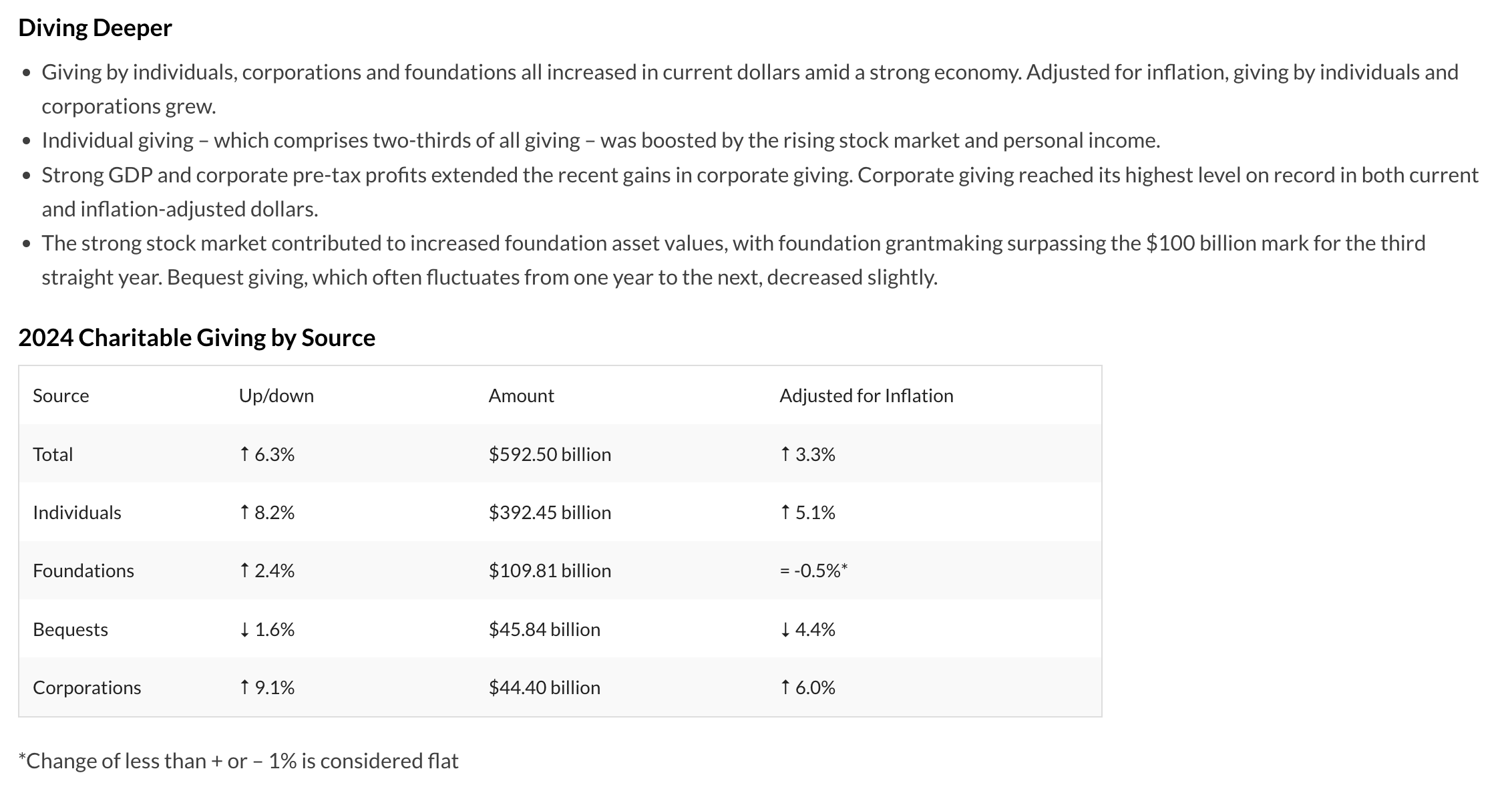
Chart and Data Source: Giving USA
This is why the monthly giving conversation needs to get bigger.
It cannot be only about checkout flow.
It cannot be only about the button.
It cannot be only about the donation page.
It has to be about the runway before the donation page.
Are enough people seeing your organization?
Are you memorable?
Are you showing up consistently?
Are you building trust before you ask for commitment?
Are you using channels that help people understand your mission in a serious, credible way?
Are you stretching your budget toward relationship-building visibility, not just short-term response?
Because if the answer to those questions is no, the donation page will not save the strategy.
Monthly giving starts earlier.
It starts with visibility.
It starts with trust.
It starts with showing up in ways that make people believe your organization will matter beyond today’s campaign.
It starts with building a brand people feel good about staying with.
And that is why this matters so much to AdGood’s mission. We believe nonprofits should have access to the kinds of media environments that help build lasting donor relationships, not just short-lived campaign spikes. We believe premium CTV can help nonprofits earn trust earlier, show up more powerfully, and make limited budgets go further. And we believe the organizations that build that trust before the donation page will be the ones that grow stronger monthly giving programs over time.
Because a recurring donor is not just responding to an ask.
They are responding to confidence.
They are responding to credibility.
They are responding to the feeling that this is an organization worth staying with.
That begins long before the donation page ever loads.
If your nonprofit is looking for a smarter way to build awareness, trust, and long-term donor relationships through premium streaming TV, reach out to AdGood to get started. Contact Us
