
The Biggest Brands Were Built on TV. Nonprofit Brands Can Be Built There Too.
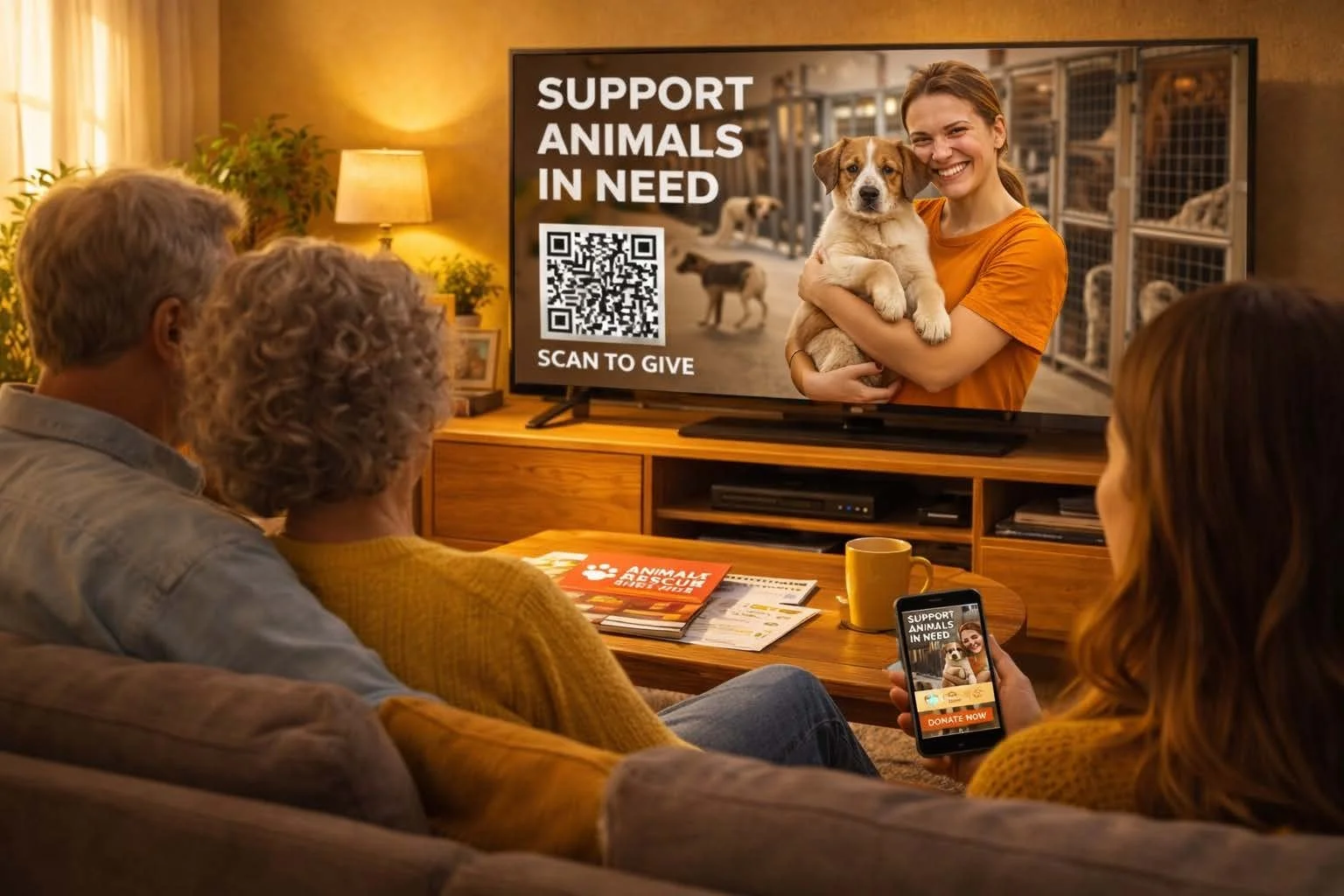
Why the biggest screen in the home still matters in the donor journey, and how CTV can help nonprofits build trust across audiences.
For years, nonprofits have been pushed toward a narrow definition of marketing success: lower the cost per click, chase the last-touch conversion, prove the donation, move on. That logic made fundraising more measurable. It also made too much nonprofit marketing feel smaller than the mission itself.
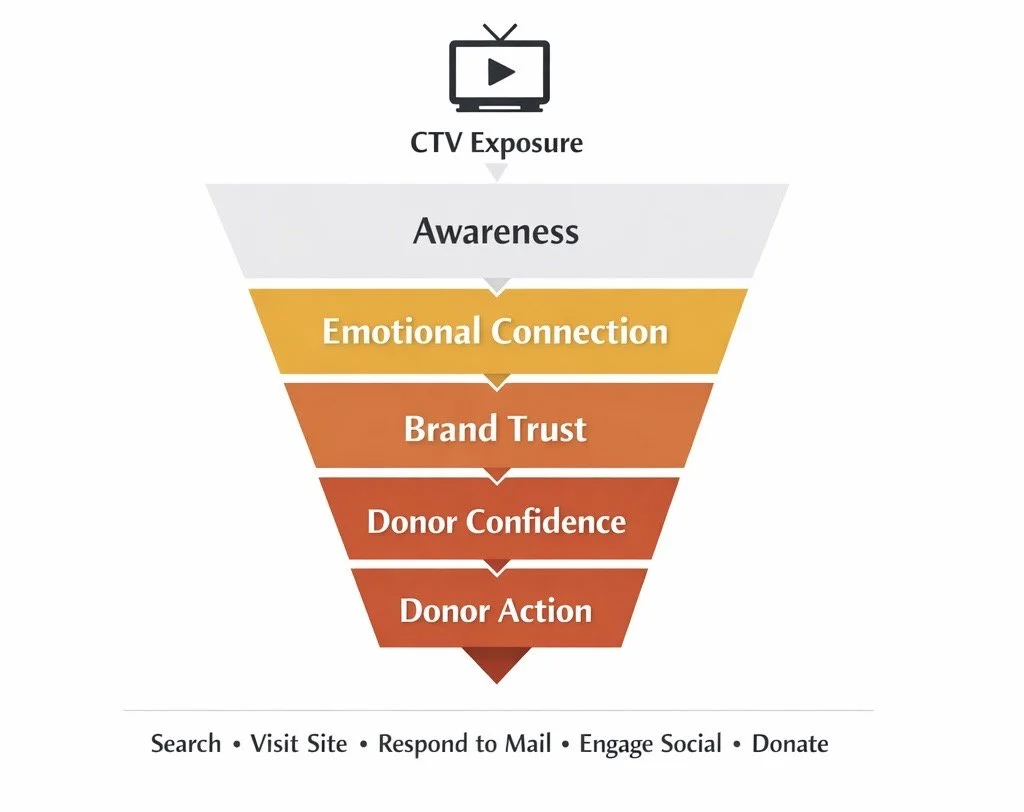
Because donations are not ordinary purchases. They are decisions rooted in trust. Before someone gives, they need to believe your organization is real, credible, effective, and worth supporting. Awareness matters. But awareness alone is rarely enough. What turns awareness into action is confidence.
TV still builds trust at scale
The case for television has never really been about screens alone. It has always been about what television does better than almost any other medium: build memory, emotion, and trust at scale. Peter Field’s effectiveness work for Thinkbox argues that TV’s enduring strength comes from a rare combination of attention, emotional power, and trust. For nonprofits, that matters because giving is not just a transaction. It is an act of belief.
Streaming is now the center of television
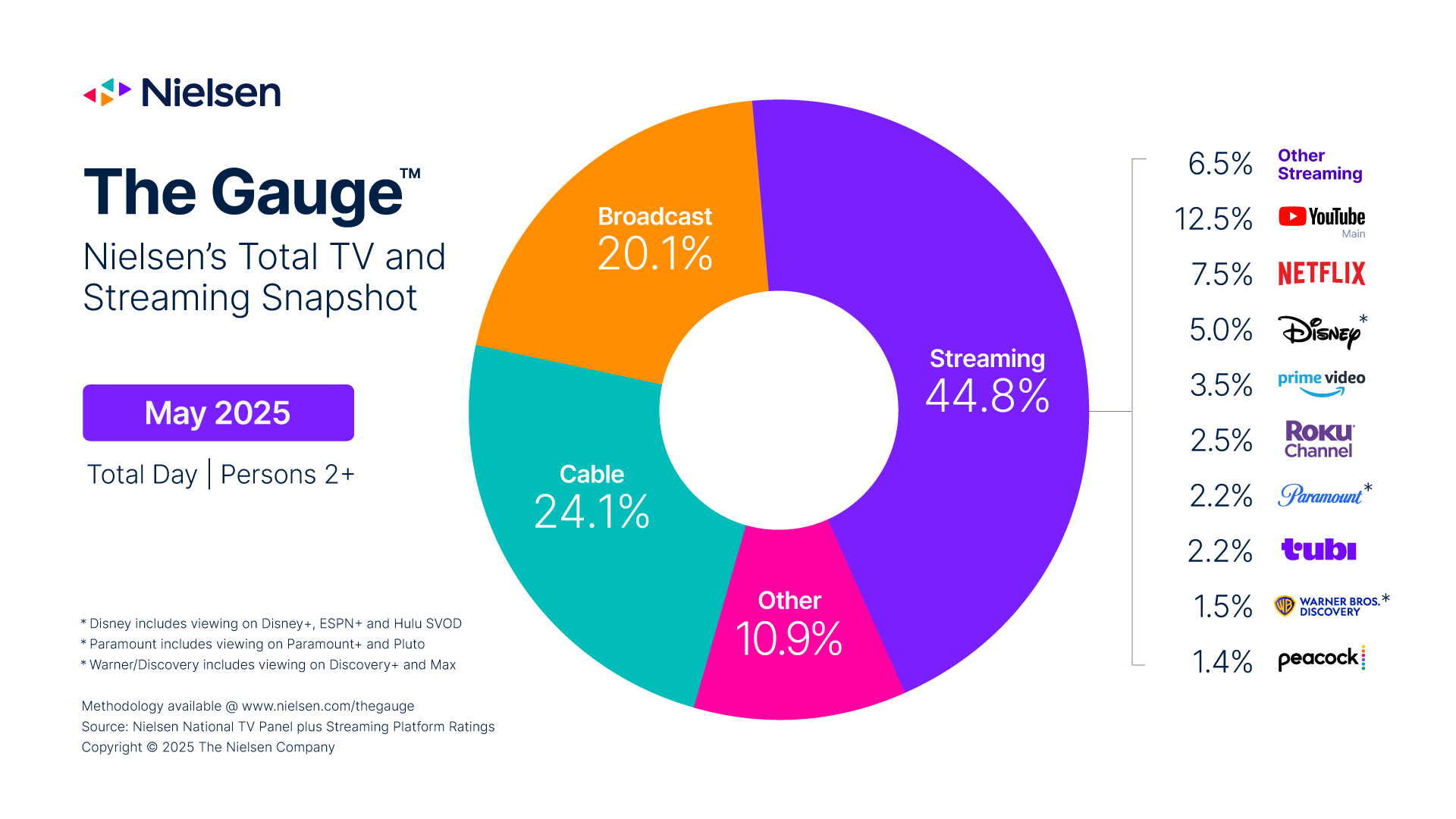
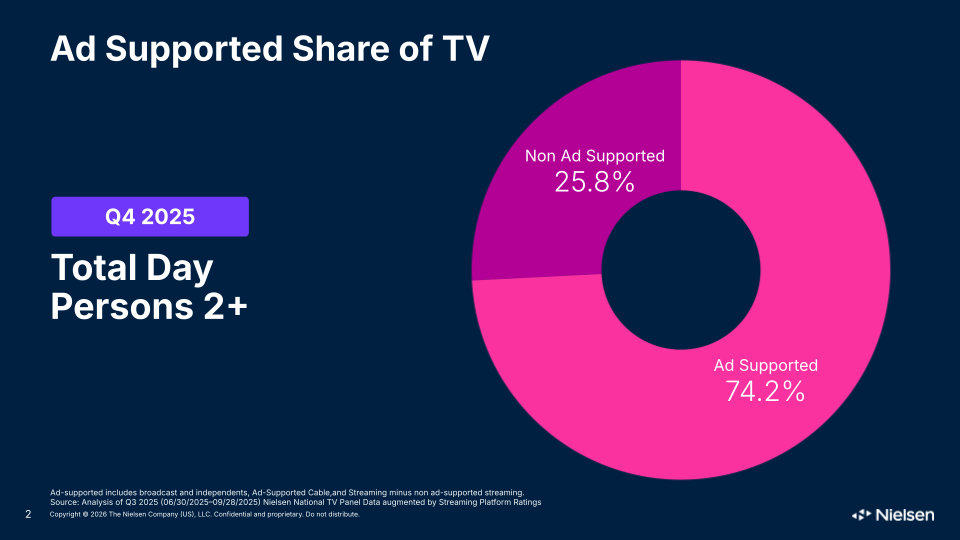
Streaming is no longer a side door into TV. It is TV. Nielsen reported that streaming represented 44.8% of all TV viewing in May 2025, surpassing broadcast and cable combined for the first time. Nielsen also found that ad-supported television accounted for 74.2% of total TV viewing in the fourth quarter of 2025. In other words, nonprofits are not stepping into a niche channel. They are stepping into the center of how people now watch premium video.
Premium context changes how your mission is perceived
A nonprofit story shown on the biggest screen in the home, next to premium shows, films, sports, news, and entertainment people intentionally choose to watch, carries a different weight than a message encountered mid-scroll. DISQO reports that 57% of viewers cite CTV as their primary device for premium video, describing the format as more immersive and aligned with deeper engagement. Recent TVision-backed reporting also found premium video platforms are 18% more likely than YouTube to convert viewing time into attentive minutes on CTV. Context changes perception. Premium content creates premium perception.
Donor trust is not optional
Give.org’s donor trust research found that 63.0% of respondents rated trusting a charity before giving as essential, while only 18.5% said they highly trust charities overall. That gap should get every nonprofit leader’s attention. People want to trust charities more than they currently do. They are open to giving, but they need reasons to feel confident first. Marketing, at its best, helps create that confidence. It helps a donor move from “I have heard of them” to “I believe in them”.
Trust looks different across generations
The need for trust is consistent, but the cues people use can differ by age. Older donors often respond strongly to familiarity, legitimacy, and staying power. Younger donors may respond more to authenticity, relevance, and mission alignment. Give.org’s donor trust reporting has shown that people use different signals to decide what feels credible across generations. That is exactly why brand-building matters. CTV gives nonprofits room to reinforce recognition for one audience while creating a more emotionally resonant first impression for another.
CTV gives nonprofits precision without shrinking the story
Traditional TV was powerful, but blunt. CTV changes that. Nielsen notes that connected TV now allows advertisers to reach audiences using viewing patterns, demographic profiles, and declared interests. That means nonprofits can pair full-screen storytelling with smart targeting. They can build campaigns around geography, language, audience attributes, interests, and campaign goals. They can support a local fundraising push, a national awareness effort, a Spanish-language campaign, an animal welfare initiative, or a donor re-engagement effort tied to a specific season or market.
Nonprofit storytelling is essential to connecting with donors
A nonprofit needs room to explain who it serves, what it solves, and why its work matters. It needs room to create dignity, not just urgency. It needs room to connect emotionally before it asks financially. A donor may eventually give through search, direct mail, paid social, or a website visit. But the decision often begins earlier, when a person starts to feel that an organization is familiar, trustworthy, and worth inviting into their values. That is what TV has always done for brands: recognition before response, confidence before conversion, meaning before action.
Marketing should not stay a cost center
At AdGood, we believe nonprofits should not be locked out of the most powerful trust-building environments in media. We are a nonprofit building a platform for nonprofits because we believe marketing should do more than consume budget. Done well, marketing builds awareness that compounds, trust that lowers fundraising friction, and demand that strengthens every other channel around it. Over time, that is how marketing stops behaving like a cost center and starts functioning more like an asset.
A call to nonprofits
Most of the biggest brands were built by showing up consistently on TV. Nonprofit brands can be built there too. If your organization is ready to use TV to build trust, strengthen donor relationships, and turn awareness into action, AdGood is ready to help.
