
The Great Wealth Transfer Is Coming. Will Donors Know Who to Trust?
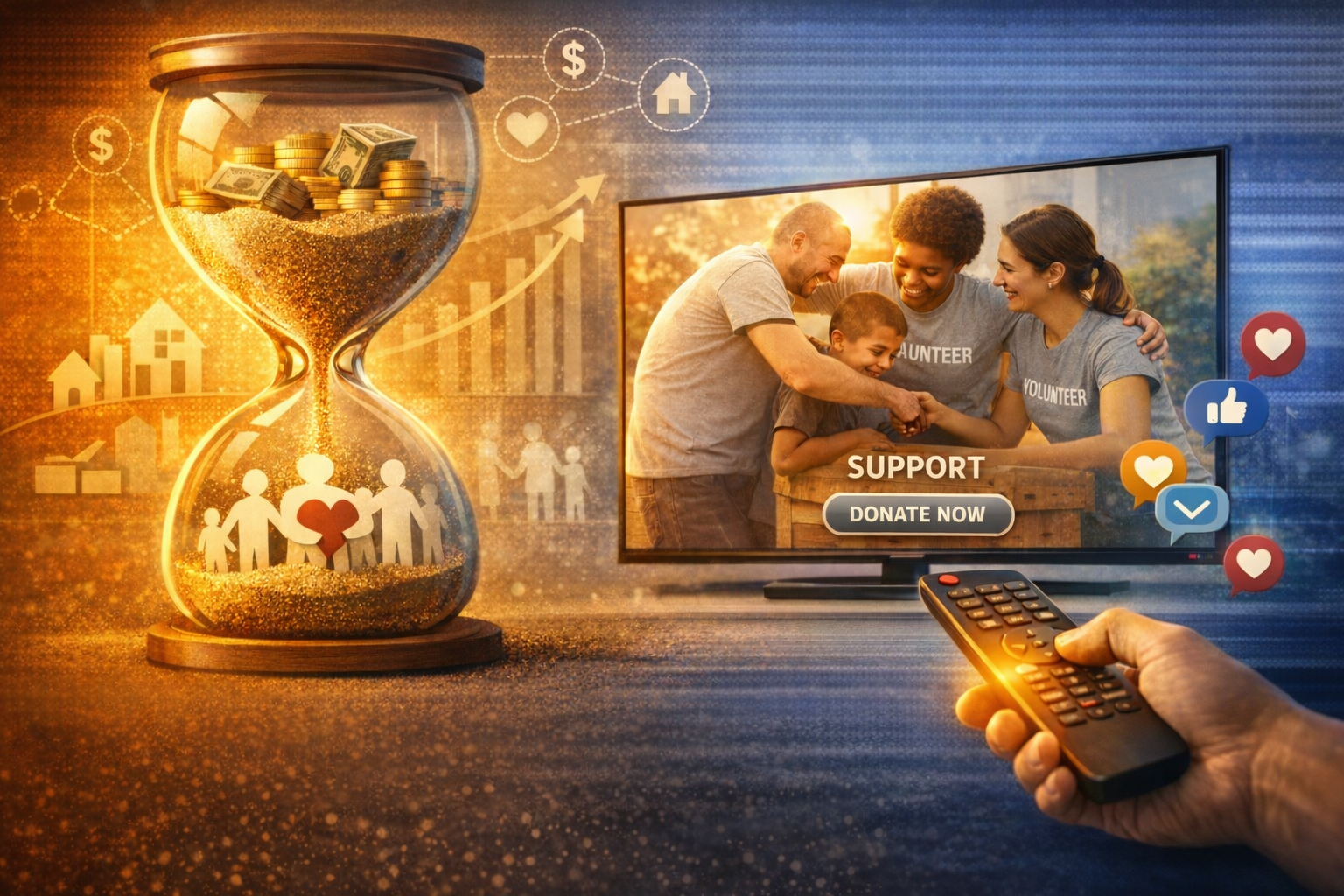
The Great Wealth Transfer will not just reward the organizations with the biggest donor files. It will reward the organizations that know how to build familiarity, trust, and emotional connection before a donor is ever asked to give. That is why marketing infrastructure matters so much right now. In a sector where donor participation is thinning, small-dollar giving is under pressure, and future charitable dollars will increasingly be influenced by a smaller group of households, nonprofits cannot afford to think of marketing as separate from fundraising. It is part of fundraising. It is what helps create the confidence that makes giving more likely in the first place. Cerulli projects that $124 trillion will transfer through 2048, including roughly $18 trillion to charity, while the Fundraising Effectiveness Project’s Q1 2025 data shows dollars raised up 3.6% year over year, but donor counts down 1.3%, with the smallest donor segment falling 11.1%. That combination should be a wake-up call: the future will belong to the nonprofits that earn trust early and stay visible consistently.
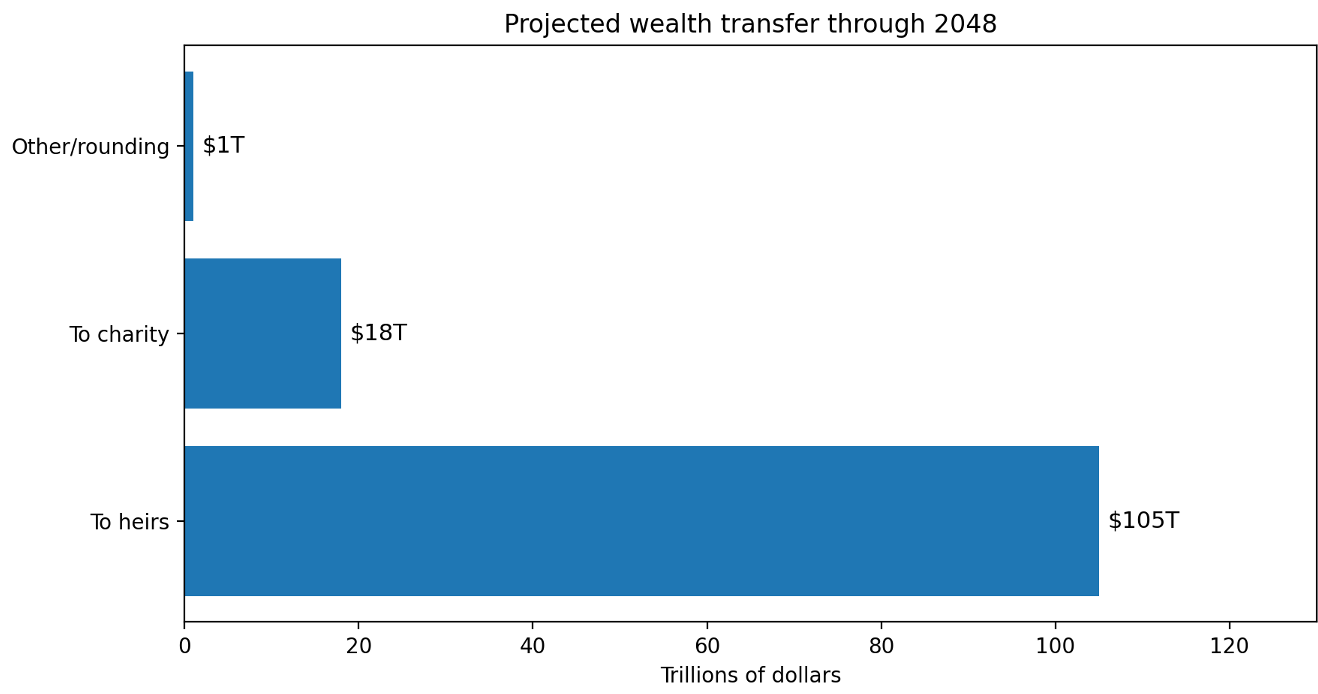
Concentration of projected transfer volume among high-net-worth households. Chart based on Cerulli data.
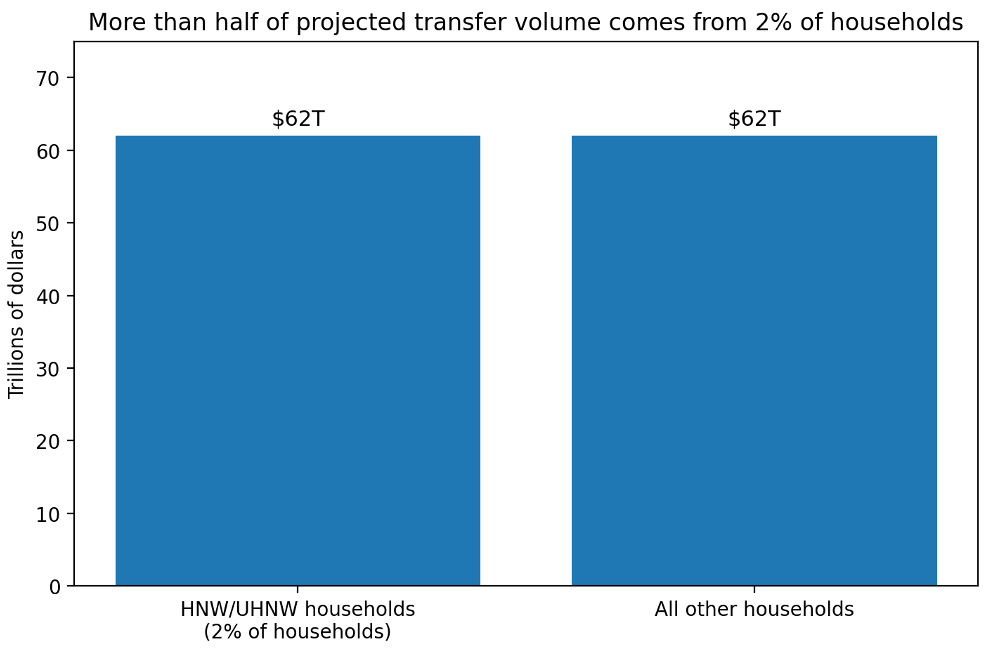
Concentration of projected transfer volume among high-net-worth households. Custom chart based on Cerulli data.
An effective donor funnel is not just about getting someone to click on a donation page. It is about moving someone from awareness to recognition, from recognition to belief, and from belief to action. That matters even more in a trust-driven category like nonprofit giving. Independent Sector’s 2025 research found that 57% of Americans report high trust in nonprofit organizations, more than any other sector measured. That is an extraordinary advantage. But category-level trust is only the starting point. Donors still have to recognize and trust your organization specifically. The nonprofits that win will be the ones that turn general sector goodwill into brand-level credibility, familiarity, and confidence over time.
This is exactly where connected TV can play a powerful role.
If nonprofits want to build trust with future donors, they need channels that do more than chase immediate conversion. They need channels that can carry story, emotion, legitimacy, and memory. Connected TV does that in a way few other environments can. Nielsen reported that streaming reached 44.8% of total TV viewing in May 2025, surpassing the combined share of broadcast and cable for the first time, and then climbed to 47.5% of TV viewing in December 2025. That is not a niche channel. It is where audiences are already spending time, including in premium long-form viewing environments that allow nonprofit stories to land with more depth and less clutter than many direct-response placements.
For nonprofits, that matters because trust is not built only through performance marketing. It is built through repeated exposure in credible environments. It is built when people see an organization show up professionally, clearly, and consistently. It is built when a nonprofit’s mission is presented with the same level of quality and seriousness that major consumer brands bring to the screen. In that sense, CTV is not just a media channel. It is a trust-building channel. It gives nonprofits a way to reach donors where they are already watching, with storytelling that feels premium rather than disposable.
But just as important as reach is efficiency.
Most nonprofits do not have the luxury of wasting media dollars. Every impression has to work harder. Every campaign has to stretch farther. That is why budget efficiency is not a side issue; it is central to impact. When a nonprofit can access higher-quality inventory at pricing designed for the nonprofit sector, it can do more than simply buy media. It can build a larger top of funnel, create more sustained visibility, and generate more opportunities to convert awareness into donor action. And when that happens, the value is not just in lower CPMs. The value is in what those lower costs unlock: more reach, more frequency, more continuity, and more room to build trust over time.
That is core to AdGood’s mission.
AdGood exists to help nonprofits access premium streaming TV inventory through a program built specifically for them. Not as an afterthought. Not as a generic media buy. Not as a repackaged version of the commercial market. AdGood’s model is purpose-built to give nonprofits access to quality inventory and a nonprofit focused reduced pricing structure so they can participate in one of the most powerful brand-building channels in modern media without being priced out of it. That matters because a nonprofit should not have to choose between credibility and affordability. The organizations doing life-changing work deserve access to the same kind of premium environments that help major brands build trust and recognition.
This is where the conversation about “stretching the budget” becomes much more strategic. Stretching the budget is not simply about buying cheaper media. It is about maximizing mission impact per dollar spent. It is about helping a nonprofit get in front of more of the right people, more often, in better viewing environments, so awareness has a chance to become familiarity, and familiarity has a chance to become trust. When nonprofits can extend their media budgets further inside premium streaming environments, they increase the odds that future donors will know who they are before the fundraising ask arrives.
That is especially important in a moment when monthly giving and long-term donor value matter more than ever. M+R’s 2025 Benchmarks found that, among participating nonprofits, monthly giving accounted for 31% of online revenue in 2024, while revenue from monthly giving rose 5% year over year and one-time online revenue was flat. That is a strong reminder that sustainable nonprofit growth is built not just on one campaign or one ask, but on systems that create long-term donor relationships.
The Great Wealth Transfer is not just about money changing hands. It is about attention, trust, and decision-making power shifting to the people and organizations that have earned belief before the ask. Nonprofits that build a stronger funnel now and use channels like CTV to tell their story in premium environments while making every dollar go further will be in a far stronger position to compete for tomorrow’s donors. That is the work AdGood is built to support, helping nonprofits turn limited budgets into broader reach, better visibility, and greater mission impact.
If your nonprofit is ready to explore how CTV can help build trust, expand reach, and drive stronger donor relationships, reach out to AdGood to get started. Contact Us
